Echoes

I heard my son’s voice bounce like a ping pong ball about the ancient rocks. Reverberating free and carelessly.

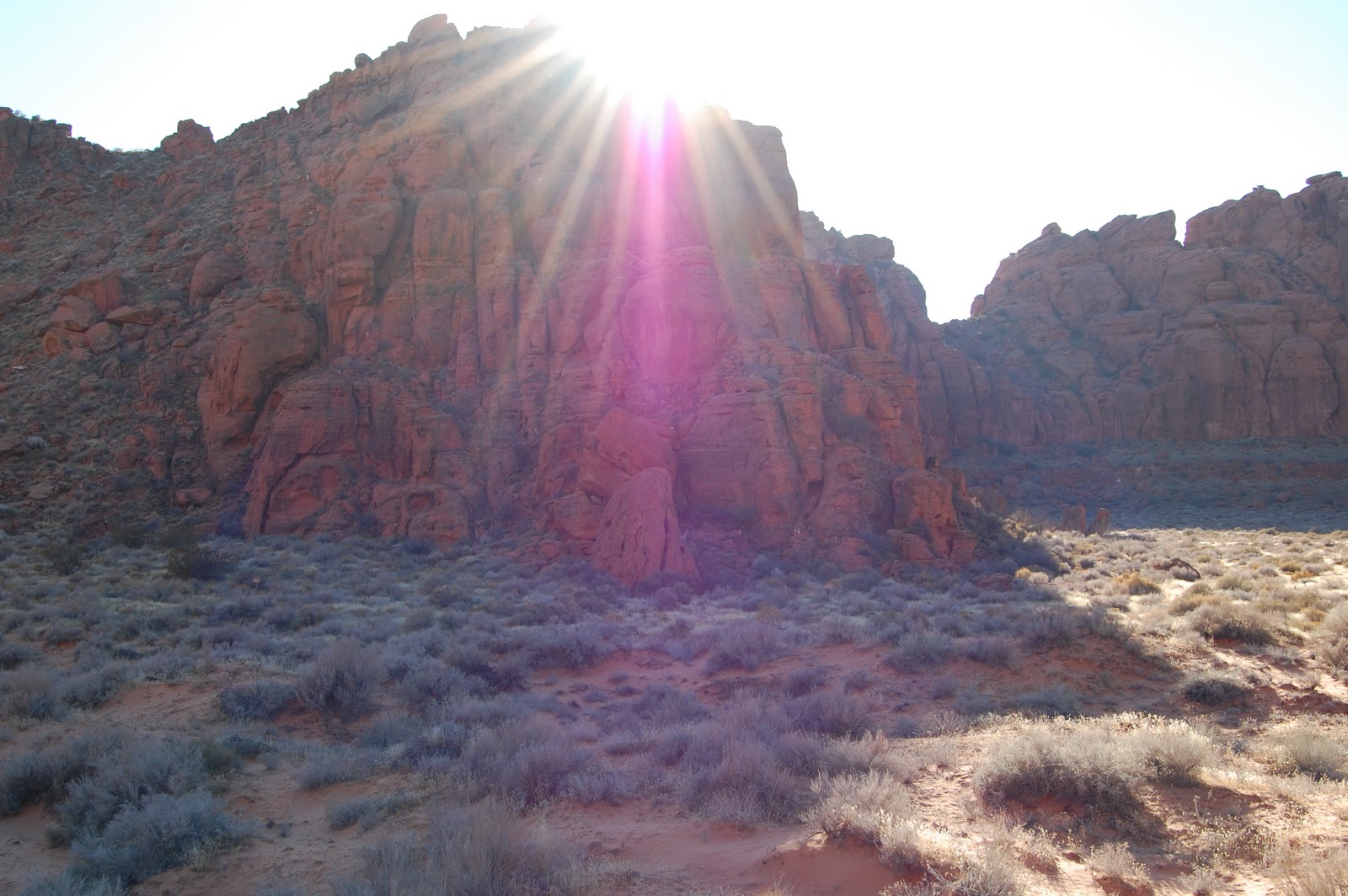
Unaware of it’s significance he played gleefully on the cool pink sands of the alien desert escape. Racing up steep dunes with winged feet. His grin bared in delight.

My daughter joined him. Wild and fiery her tiny voice filled the ancient valley. Her laughter roared up its walls and coated them with her spirit.

They joined a thousand hearts who have passed through these natural passages.

Americana

“Es una Americana”
That was that first thing that crossed my parents minds when I introduced her for the first time.
Over the years they had grown accustomed to a shameful parade of women who I had brought home. But there was something about this young woman that they didn’t quite trust.
“In America, white women have loose morals” my mother warned me. “In America, blondes will break your heart and move on to the next man.” my father testified.
They shook hands and exchanged nervous pleasantries in broken English. Secretly they hoped that this young woman would amount to not much more than a common cold so I could then meet a wholesome Mexican girl.

Bring It

The week had not started off right but then again the 40 days before that Friday hadn’t been our best. I had arrived to the apartment on the second floor of the complex in Montebello and I knew as I slid the crooked key into the lock that I had inadvertently set off a chain of inevitable actions that had been waiting  to collapse like a  row of propped up dominoes.

As usual, upon entering our shared 800 square feet I made my way to the kitchen that sat immediately off the front door and to the right. Like instinct my hand grabbed the wooden handle to the yellowish colored refrigerator that had come with the space. With a jerk I opened the door and heard the soothing clanking of glass bottles that awaited within.

I reached in a pulled the beer from the lower shelf, opened it and took the first of many swallows. She would not arrive home for a couple hours and for now the empty and quiet space was mine. In less than twenty minutes, as I sat on the white chair we had recycled from her German grandparents home, the liquor had begun to warm the veins at my arms and was beginning to creep its way to my chest, throat, eyes and brain. The familiar daze kicked in and I forgot that time existed.

Eventually though, the jarring front door reminded me.

She came in with a half-smile on her face and that eroded when she noticed the four bottles sitting at the counter of our tiny kitchen. I chose not to acknowledge it. At the time it seemed prudent to let the usual take its course. Today though, I reminded myself, was not usual.

Who fired the first shot is unclear. She was tired. So was I.

The last few month had become a constant unwillingness from both of us to  meet in the middle. My constant drive to push limits without concern for her needs and her growing campaign towards a more adult life had become near irreconcilable forces. The arguments were constant. Feelings were hurt on a daily basis and as of late conversations had become mere efforts to pass on the most elementary bits of information.Who’s paying this bill? Do you have the late shift this week or next? Are you going out with them again?

The argument was long, exhausting and draining. Neither party had clear answers and ultimately it seemed that the lack of common ground led to only one conclusion.

We were not working as a pair. We had tried and enjoyed a great experiment together but we were different people and now it was time to seek opposite paths. My eyes ached by 11:38 that evening. I could continue to cry on but my body had no more tears. Worst of all, as I grabbed the keys from the counter I looked through the kitchen and viewed her flaccid body on the white chair.

I could see disappointment and a broken heart.

When we met, the young man she experienced had promising talents and virtues that over the years had leached to the world of frenzied mediocrity at the sands and bars of Venice Beach.. She had invested time and love. For her efforts she had received very little.

The cold of the evening hit my cheeks as I closed the door behind me. Perfectly sober I found the red Nissan Z sports car we had bought together in the parking lot. As I pushed the silver key into the ignition I felt the weight of the last few months land on my thighs.

I was leaving the best person I had ever met. We had drawn lines and we’d possibly never be together again.

Guayavera

My father wore Guayaveras,

Despite their casual nature, the men that would frequent our home in Mexico and smoked the strong cigars wore them like tuxedos.

I often marveled at the intricacy of the weave. Imagined a day when I could sit around our court yard with my own and join the men who told the stories, blasted out obscenities and told the dirty jokes with my father.

At the end of the evening the men would leave. My father had enjoyed too much cognac and his nose would be red.

Then I knew I would pay penance for the day’s trespasses. For the broken dish at the party, or falling down off the tree and scuffing my newer shoes.

The belt would sail through the air and strike. Often until he lost his breath and tired out.

Then my mother would relieve him of his shirt and put him to bed.

On the morrow…the shirt would be crisply hung. Ready to be worn again.

Stories

My stories are not epic.

The imagery of my 30 years is mild compared to the exciment of those before me. There are so many who have faced truly cold winds, sharpened winds, cutting criticisms.

But my story is mine. Peril is real and so is fright.

Oh Christmas Tree

The skies were cloudy when the last bell of the year rang at Malabar Elementary and we were released to our parents for the holiday break. I had lost my jacket a few weeks earlier and my thin gray sweater was too thin to keep the Southern California winter breeze from jarring me when I stepped out of the school’s main building.

The fourth grade was turning out to be challenging and confusing. I had started the school year knowing little-to-no English and I was just now slowly starting to find my way around the new language and the friends that it game me access to. I said my good-byes to a few key people and made my way to my mother who awaited with my two little sisters at the corner of Fresno Street.
Her year had been interesting too. She had moved our family from Mexico City to the U.S. to meet my father who had made his way here to make a new life for us. Seemingly timid and always proper, she struggled to acclimate to the new language, currency, my father’s work hours and a culture that she considered lost. Nonetheless, her family had to be whole and she left her homeland and made East Los Angeles her new residence.
My father worked security at the local hot spot and market. His job entailed catching thieves that picked the pockets of tourists, solving disputes between the vendors and breaking up fights between sweaty drunks who had enjoyed too much tequila at the upstairs bars. He worked around the clock enjoying the physical aspects of the job. Taking pride in the baton he wore, the badge at his chest, the occasional use of his fists and the women who frequented his office. Silvio was the head of security 12 to 16 hours a day and despite his efforts his pay was just enough to cover the basic needs at home.
That day at lunch, Santa Claus (the school’s vice-principal) had visited our class and dropped off presents. I was one of the lucky ones who picked a red remote control race car from his satchel. The boys in class sighed heavily when I tore the blue wrapping paper apart and drew from it the shinny box that held my prize. They flipped over the large rugged tires on the box’s picture and most congratulated my luck. Then, above my shoulder, a boy named Freddy said, “the good gifts always go to the poor wet-backs, he doesn’t even have a Christmas tree.” The room stood quiet for a moment and then the silence was broken by a tepid round of snickering once they realized our teacher hadn’t heard. I didn’t know what a wet-back was but I knew the word poor and I knew that it wasn’t good.  
I ran to the corner of Fresno and Malabar and reached my mother holding my prize. I could hardly contain myself and she had to shush me a handful of times before I could begin to detail the day’s events. We walked the mile back home hurriedly and the cold breeze was sharp and hurtful at the ears. Then on Blanchard street I asked her if we were poor.
She stopped and reached for my shoulder so that we stood squarely to each other. She asked me why I asked and I told her what Freddy had said. She looked up and then seemed to search the streets for something. When she found it she stretched out her arm and asked me to retrieve it.
On the opposite side of the street, a small branch from a fir rested. Perhaps it could have fallen from someone transporting a tree home for the holidays. It was no more than a foot tall and some of the needles towards the wider end were starting to turn brown. I picked it from the ground, joined my family and finished our walk home.
After supper was over, my mother asked us to turn off the TV set at the kitchen table which rested against a wall. The house still had the scent of fried rice, re-fried beans and tortillas. The windows wore the steam from the boiling coffee pot and help turn the light in the room warm. From the bedroom, my mother produced about a half dozen of magazines. Inside them, she said in Spanish, are “pictures of snow globes, tree decorations and presents”. “Cut out as many as you can and make a pile.” My sisters and I worked for 30 to 40 minutes. We fought, laughed, took breaks and finally finished with a healthy mountain of cut outs. When we thought it was enough we called my mother into the room.
She came in with the branch and some clear tape. After a minute of scanning the room she asked me to unplug the television and remove it from the table. She had found the spot.
With great care she taped the branch on the wall and laid a white bed sheet on the table. She created peaks and valleys by putting two soup cans under the sheet. Then her hand took one of our cuttings and showed us carefully how to tape them to the wall and decorate our tree.
My sisters and I took the next few minutes feverishly attaching cut outs to the wall. We put up pictures of ornaments big and small. Pictures of Santa, Jesus, snow globes, shiny lights, tinsel and finally presents.
When we were done, she asked us to take a step back and brought us close together.
She then said.
“We are not poor. We have each other. This year we won’t have presents but I promise you that next year we will. Your dad and I will do what we can to make every picture of a present taped to the wall come true.”
A tear had rolled down her cheek by the time she finished her last sentence and I felt guilty for bringing up the word “poor” and winning the car. She hugged us and told us to get to bed.
Just before I did, I caught her cutting a picture of a star from a JC Penny catalog and taping it to wall a top our Christmas tree.

The Lamp

We have a pair of friends that don’t have little ones.

Their carpets are pristine white and lack the splotches from previously dropped peanut butter & jelly sandwiches.

Their furniture is  wrapped in expensive leather and lacks the impressions of little feet that make believe it’s a trampoline.

Their walls showcase the latest hues from Edward Dunn and lack the array of fingerprints at  about 3 feet off the ground.

Their lamp is a wonder of design and it stands quietly in their gorgeous home.